
It’s that time of year when I’m counting the days until the return of the light on the Winter Solstice. It’s that time of year when one bumpy little mound called Guadalupe Mountain that sits on the horizon southwest of our home, gets ravenous for light and devours the sun, gulping it down at 4:30, turning the afternoon into night. It eats the light like there is no tomorrow, which is what worries me about this long darkness—that it will never end.

I need my silly sky-blue flannel pajamas printed with fluffy cumulous clouds and tiny stars, anything to comfort me in the fourteen-hour dark. I can handle snow and cold, that’s what down jackets and boots rated for minus zero are designed for, but the darkness is another matter. When my friend in Alaska posts a picture on Facebook of the last rays of direct sunlight to hit her home until spring, I cannot fathom how she stands it.
Yet this week the days will get longer (at least in theory) by seconds every day. In actuality, Guadalupe Mountain’s hunger for light will have not yet been fully assuaged. The moment of each day’s sunset will be determined by the mountain’s peaks and valleys until finally, when January is mostly gone, it will hunker down, light-satiated at last, and wait, quietly, for its next November meal.

At its best, this darkness is an interior, introspective time, but in combination with December’s festivities it tends to magnify new grief and bring up older ones. This is the season of my parents’ deaths, sixteen days apart, thirty-three years ago. Within recent weeks I’ve gotten emails and phone calls from friends about two mothers, a brother, a sister, a cousin, a friend, and a dog who have died. They slip away, the darkness facilitating their transition.
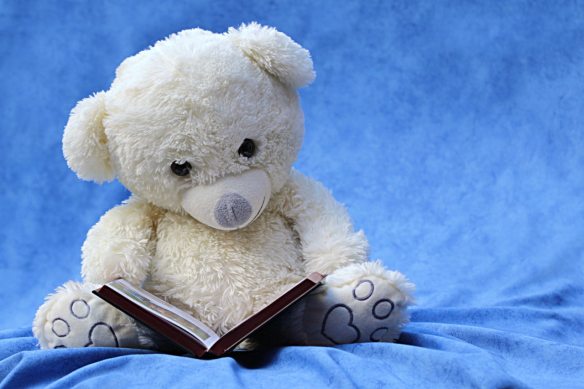
How do we comfort ourselves in the holidays, when this time of being with those we love brings our missing of them to the surface? Just as how we grieve is unique, so is what we do to comfort ourselves. We can wear our cloudy PJs until they’re threadbare like a woman who wore her deceased father’s sweater until it raveled apart. My widowed friend makes “bed muffins” from her husband’s shirts, rice-filled pillows to heat in the microwave and snuggle against in bed. After her husband’s death, she brought the outside kittens he was allergic to inside to snuggle in the empty bed with her too. If taking a teddy bear to bed brings comfort, I say do it, no matter what our age. Nobody will know unless we tell them.
A grieving daughter decorates a tree in her mother’s home to cheer her as she sells the furniture and pots and pans, sorts through boxes of crumbling photos. After my daughter Randi’s death one of my “blankies” was my mantra practice. I was sure that if I let that go, the dam would break, I’d be flooded not just with tears, but with some muck so unmanageable I would lose my hold on life. The gift? How this strengthened and cemented my spiritual practice. I figure if it got me through her death it is to be relied on for anything that will ever come my way.

I am a glutton for books, but I’m particular about their quality. After Randi’s death the level of my reading material plummeted. Later I realized this was because I could not read anything that successfully stirred up my emotions. Some glom onto books about the grieving process. I read to escape my grief. Others struggle to read at all. Joan Didion wrote in The Year of Magical Thinking that at first, after her husband’s death, she could only read headlines.
I recall accepting an invitation for some holiday meal not long after Randi’s death. Was it Thanksgiving? My memory of that time is so jumbled. When we got up that morning, the thought of sitting at a table full of cheerful people was suddenly terrifying; we canceled. Yet when we’re ready, on those special days, at the holiday dinner tables, we can look for some way to include our dead beloveds. This may be unspoken—a favorite dish cooked, a wreath on the door that was a gift handmade by our beloved. If the death is really fresh we may want to set a place at the table for this person. We did that the first Christmas after Randi’s death, placing her photo on the plate. It was both bittersweet and satisfying to include her in this manner.

My family celebrated the first Christmas after my parents’ deaths in their home. Before we ate I raised my glass to propose a toast: “To those who are present and those who are… At the word “absent” I broke into wracking sobs. Everybody let me cry. I didn’t jump up and go hide in the bathroom. I didn’t apologize. It was a perfect reflection of the reality that our attempt to celebrate was taking place in the very room where my mother had died one month earlier and that, though life would go on, it would never be quite the same. That toast and my tears were a deep, deep comfort.
May you each find your own particular way to bring light and comfort to these dark days and to your holidays.
You may buy The After Death Chronicles: True Stories of Comfort, Guidance, and Wisdom from Beyond the Veil in bookstores, through www.AnnieMattingley.com and through the following sites:
Amazon: http://amzn.to/2zSaTLB
Barnes & Noble: http://bit.ly/2ljjV0I
Indie Bound: http://bit.ly/2gEcr3f
Hampton Roads/Red Wheel/Weiser: http://bit.ly/2gM255a



 I am writing this on Halloween while the ghosts and goblins and ghouls are roaming about. Little is more fun than dressing up in costumes, but the haunted houses and fright masks and scary guys emerging from coffins distort the sacred meaning and history of this season.
 I discovered this opening quite by accident on an autumn vacation in Oaxaca, Mexico. Inspired by their Muertos festivities, I created a makeshift altar with a few candles, and some marigolds (the traditional flower of the dead) from the flower stalls at the Veinte de Noviembre Market, and one of Oaxaca’s famous sugar skulls. I used my travel sewing kit to represent my mother, a tourist brochure for my magazine publisher father. Once I lit the candles, the quality of sacredness was palpable. Though the signs were subtle, I was pretty sure I felt the presence of my parents, a first. Then came the real surprise—though I had done nothing consciously to invite it—the definitive presence of the baby I had aborted years earlier. When she (I had never known her gender!) reassured me she was all right, I was not only astounded by the visitation, but also by how much it comforted me, since I thought I had long ago made peace with my choice.
 To illustrate just how seriously Mexicans take their altars, I’ll tell you about another year I was in Oaxaca for Muertos. My Mexican son-in-law Emiliano had left for his home village before my arrival, because his father was ill. My daughter Rowena and I had already put up the altar when we got the call that his father had died. She and my grandson left at once to join Emiliano. On their arrival, his tias, his aunts, looked worried. “Who’s minding the altar?” they asked. When my daughter replied, “Mi madre,” the tias smiled and sighed with relief. To have simply stopped lighting those candles when a significant death was so fresh was unthinkable. Perhaps at any time mid-Muertos, it would always be unthinkable.
 The trains are full. The train station teams with men in uniform. It is impossible for civilians to buy tickets, not just for the day but for the week, he’s told, maybe more. Their suitcases are ready. He had tried to get his first job after college closer to home and family in Chicago. Reader’s Digest had not wanted him. He attributes this rejection to his paralyzed legs and his canes. There was no Americans with Disabilities Act in 1941. He telephones Fort Monmouth. “Of course, we’ll hold the job,” they say. “We need you,” they say, “now more than ever.” Who would be more understanding than the Army Signal Corps?
 On the crowded train, ten days later, we are the only civilians. The boy-soldiers are excited and nervous and they won’t let themselves know they are scared. They admire my delicate and pretty mother. The basket—designed to hold lettuce—that is my carrier is passed from soldier to soldier, so they can admire me too. They eye my father and his canes warily, full of pity for this crippled man, and maybe a tiny bit jealous that he gets to stay behind.
 I am able-bodied. I walk with a vigorous gait, but there are wrinkles and gray hair and that thing I call my turkey wattle and to a 20-year-old I guess I look ancient. When one sees me crossing the parking lot and holds the Credit Union door open way too long as he waits and waits for me, I feel the shadow of my father’s wounded pride rise up within me.
 Blenders go on in the middle of the night. Alarm systems may suddenly malfunction. Televisions change channels while they’re off or turn on when no one is around. Lights flash. Unexamined, these may simply seem strange, as well as unrelated to the dead. If experts are called in and no problems are discovered, we may be told, “It’s just a fluke, ma’am.”
 There was also something more fundamental to be noted. The role of an alarm system is to keep us safe, which, when we’re young, is our mother’s role as well. That protective role was one of the hardest things for me to let go of as my two daughters matured. Perhaps this mother was pointing out her desire to continue keeping her daughter safe. Before we allow a surprising event to frighten us it behooves us to try to determine what our dear dead might be trying to say.
 Synchronous experiences are easier to ignore than the beeps of an alarm system and we love to brush them off as coincidental. Again, I suggest we look for meaning. Heidi awakens at 2:22 AM convinced that her mother has died. Within minutes a call from the nursing home confirms this. Long after her mother’s death she finds that whenever she notices 2:22 on a clock, she strongly senses her mom’s presence. The time—2:22—becomes a kind of secret code language between them. Although I didn’t hear that this was true for Heidi, at times, the specific numbers may hold important keys to either the living or the dead. Sure, any of this could be “coincidence.” However, such experiences are often accompanied by an uncanny and difficult to describe (or to defend to a skeptic) awareness, a knowing. If we reject this knowing, we could be allowing logic to rob us of a sweet and profound gift.
 Annie Mattingley